Commercial Food Service Floor Coatings
Commercial Kitchen Floor Coating — Colorado Springs
Seamless. Grease-resistant. Scheduled around your operation.
Commercial kitchen floors face a specific set of challenges: constant moisture, grease and cooking oil, cleaning chemicals, heavy equipment, foot traffic, and the expectation that the floor will hold up through it all without creating a maintenance problem or a health code concern.
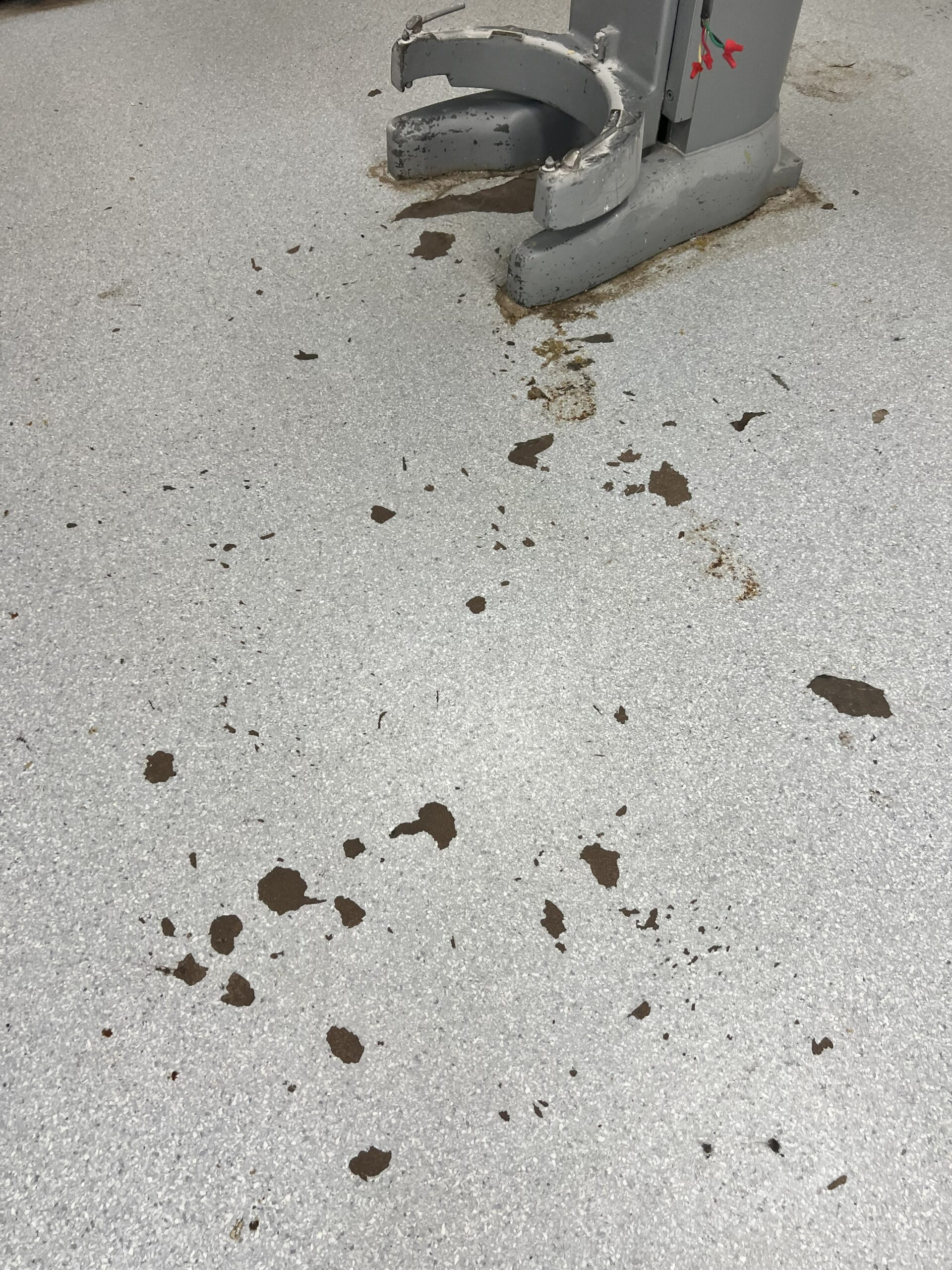
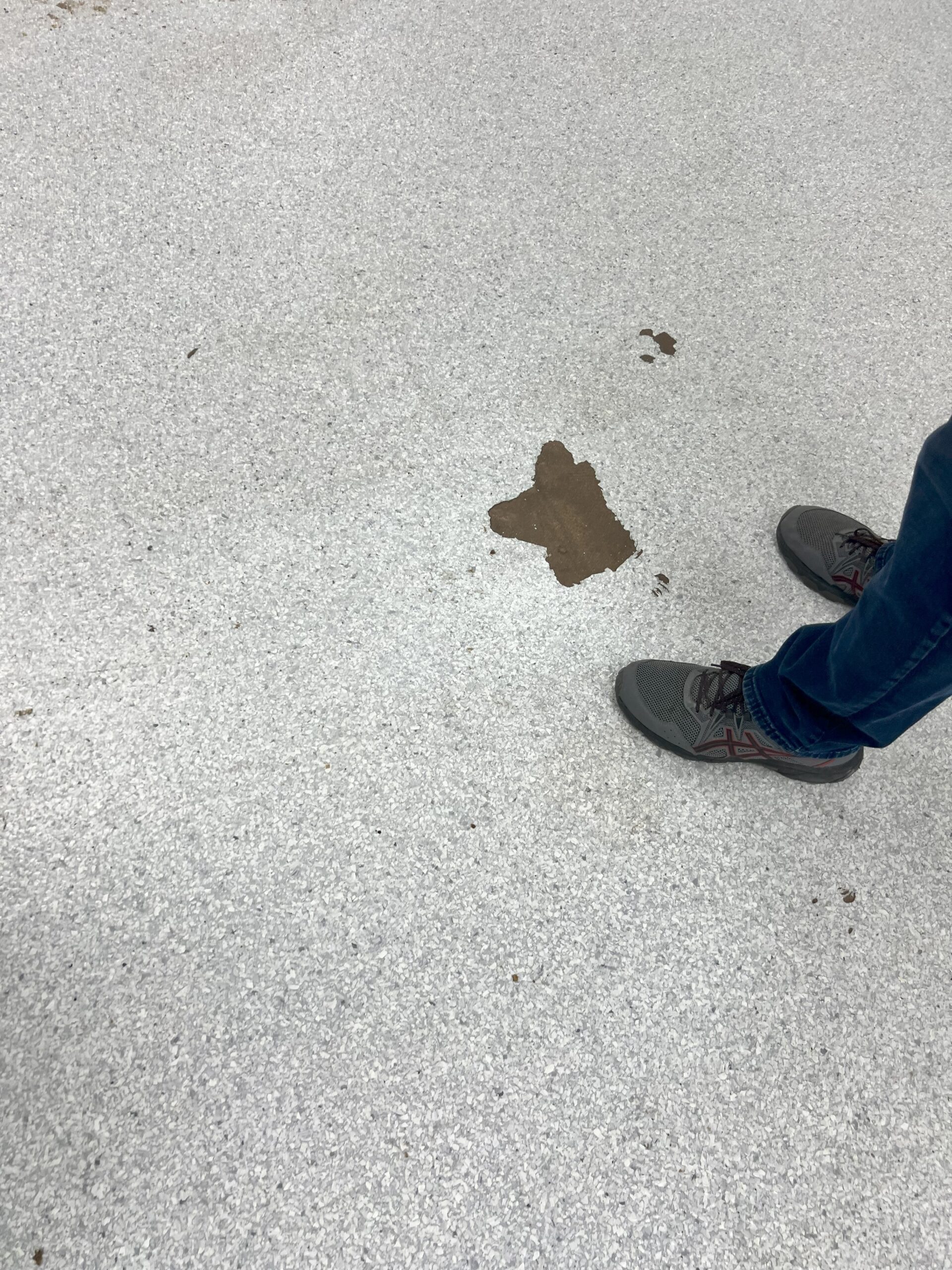
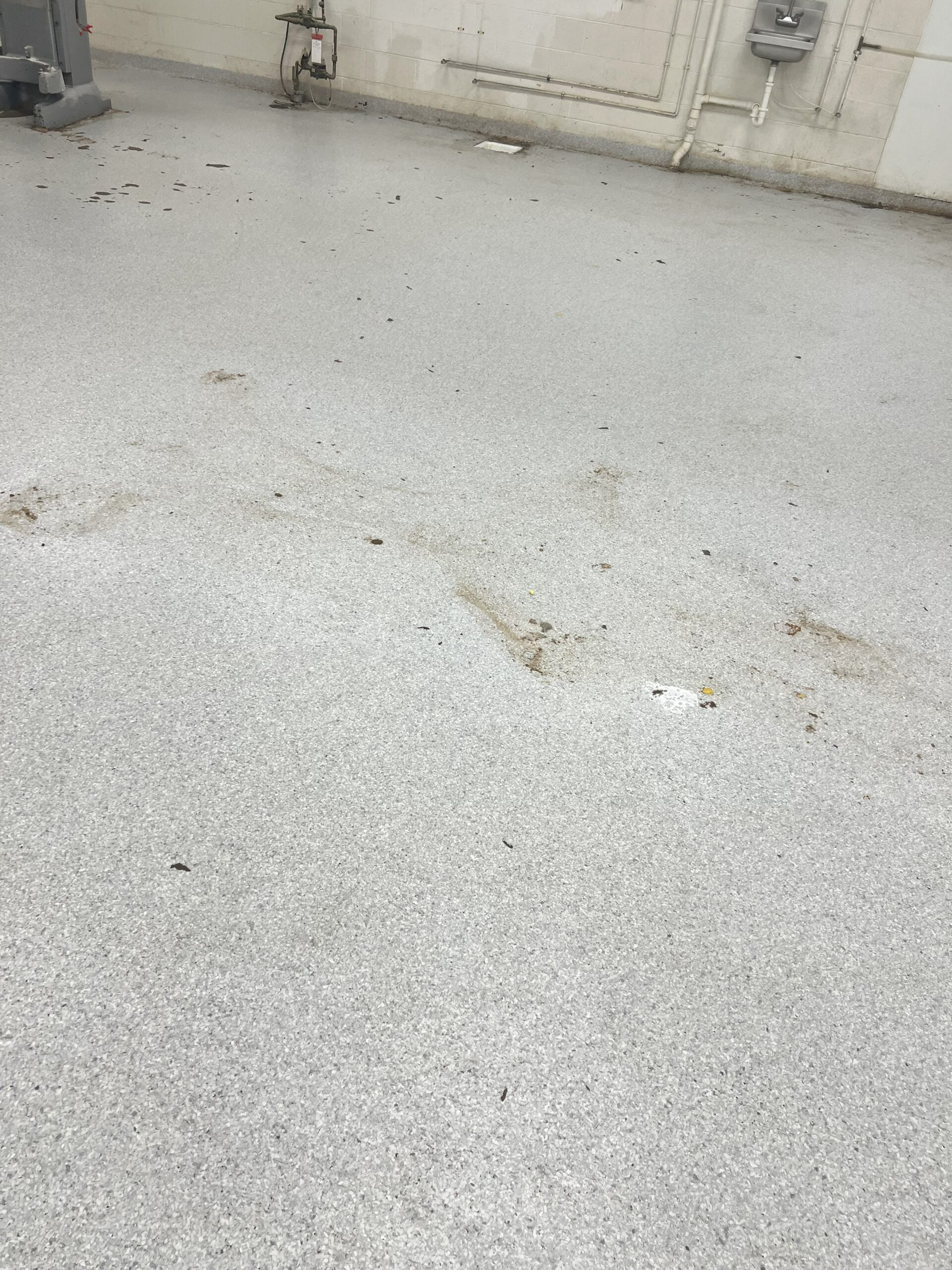
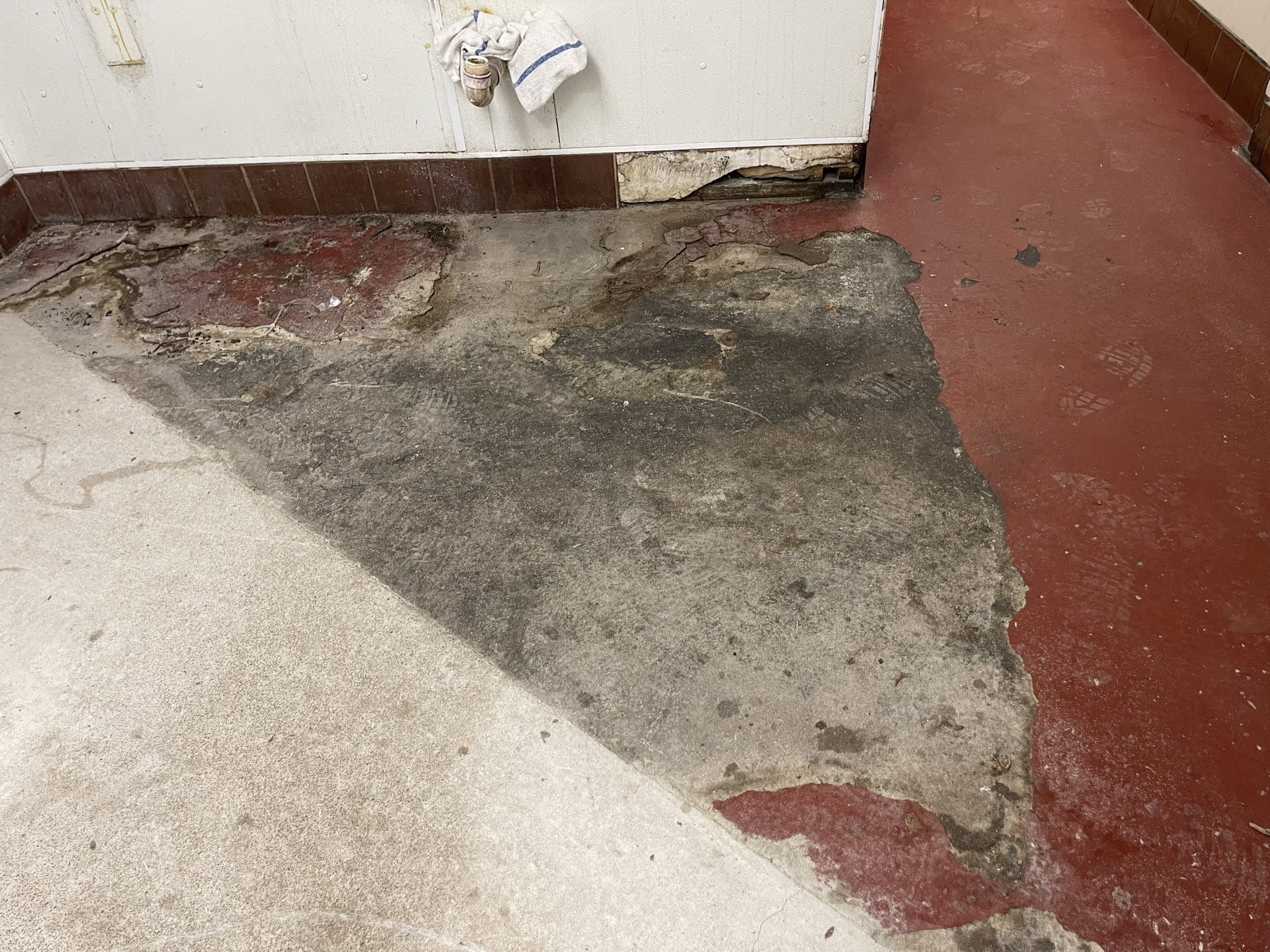
Epoxy is the most commonly installed coating in commercial kitchens — and the most commonly replaced. It stains, delaminates under thermal shock from steam cleaning, and develops surface porosity over time that traps bacteria and grease. When an epoxy floor fails in a food service environment, it fails in front of your customers and your health inspector.
Our 3-coat polyaspartic system creates a seamless, non-porous surface that resists the full range of food service chemicals, tolerates commercial cleaning equipment and high-temperature sanitation, and bonds permanently to properly prepared concrete. We have completed projects in Colorado Springs coffee shops, bakeries, breweries, and mountain community commercial kitchens — and we schedule installation around your operating hours.
Commercial Kitchen Coating Failure Points
Why Epoxy Fails in Commercial Kitchens
Thermal shock from steam cleaning
Commercial kitchens are cleaned with high-temperature water and steam equipment. Epoxy expands and contracts differently than concrete under heat cycles, eventually developing micro-cracks that allow moisture and grease to work under the coating. Delamination follows.
Grease and chemical penetration
Standard epoxy develops surface porosity over time. Cooking oil, degreasers, and sanitizing chemicals penetrate the surface and break down the coating from below, accelerating bond failure.
Bacterial harborage
Once epoxy begins to crack or pit, those surface imperfections harbor bacteria and grease that standard cleaning cannot reach. This is a food safety concern, not just an aesthetic one.
Bond failure under prep shortcuts
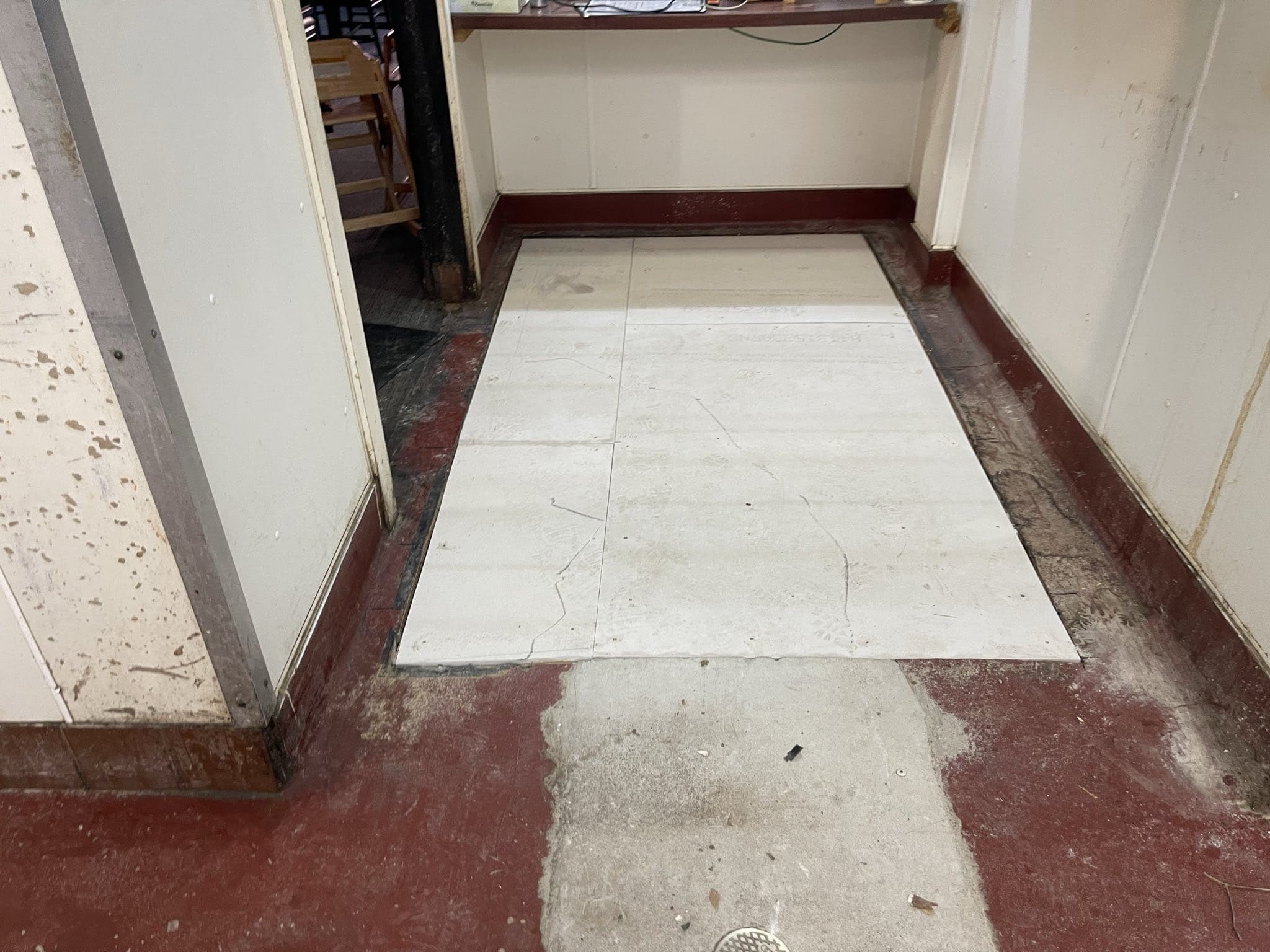
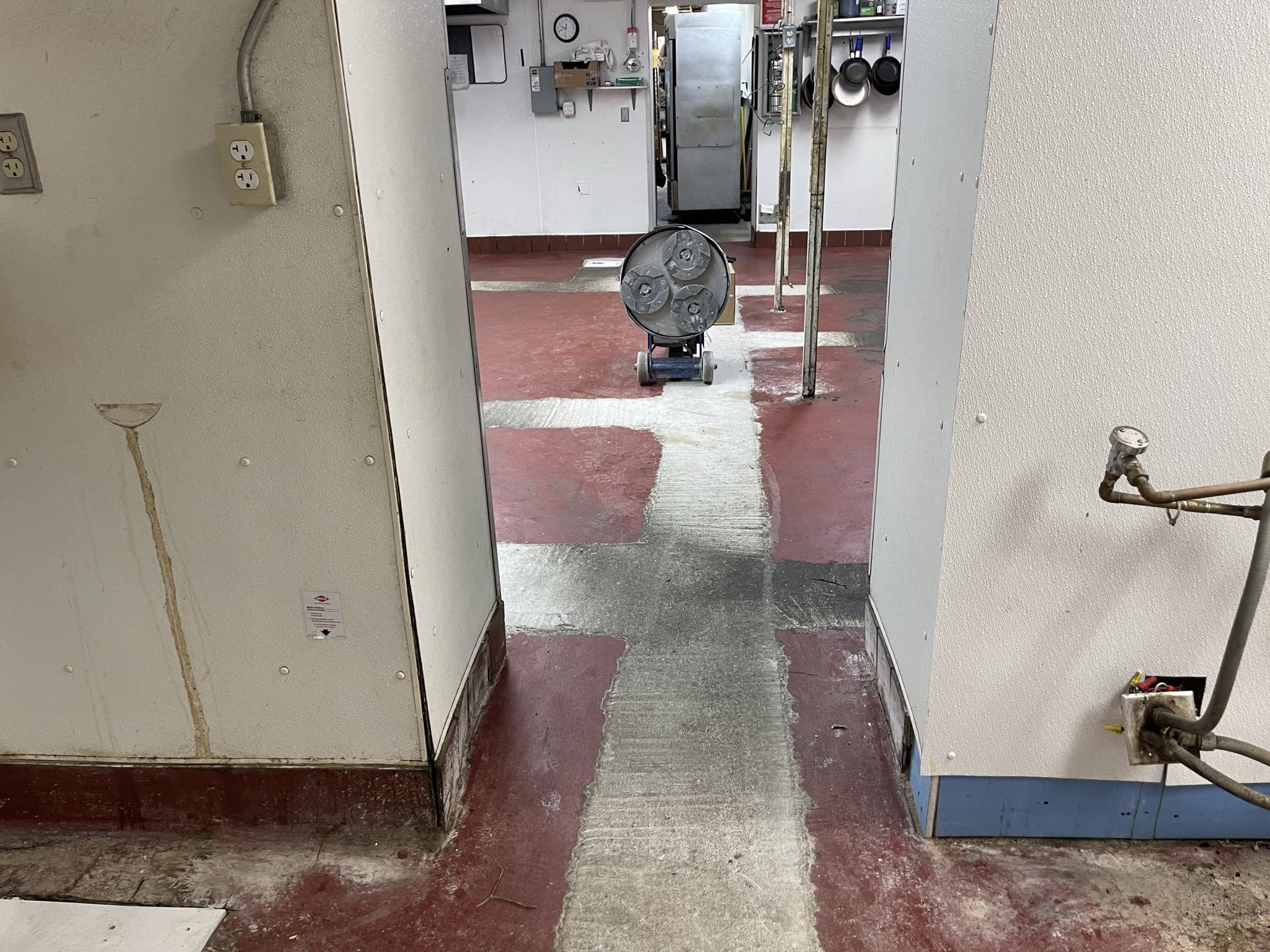
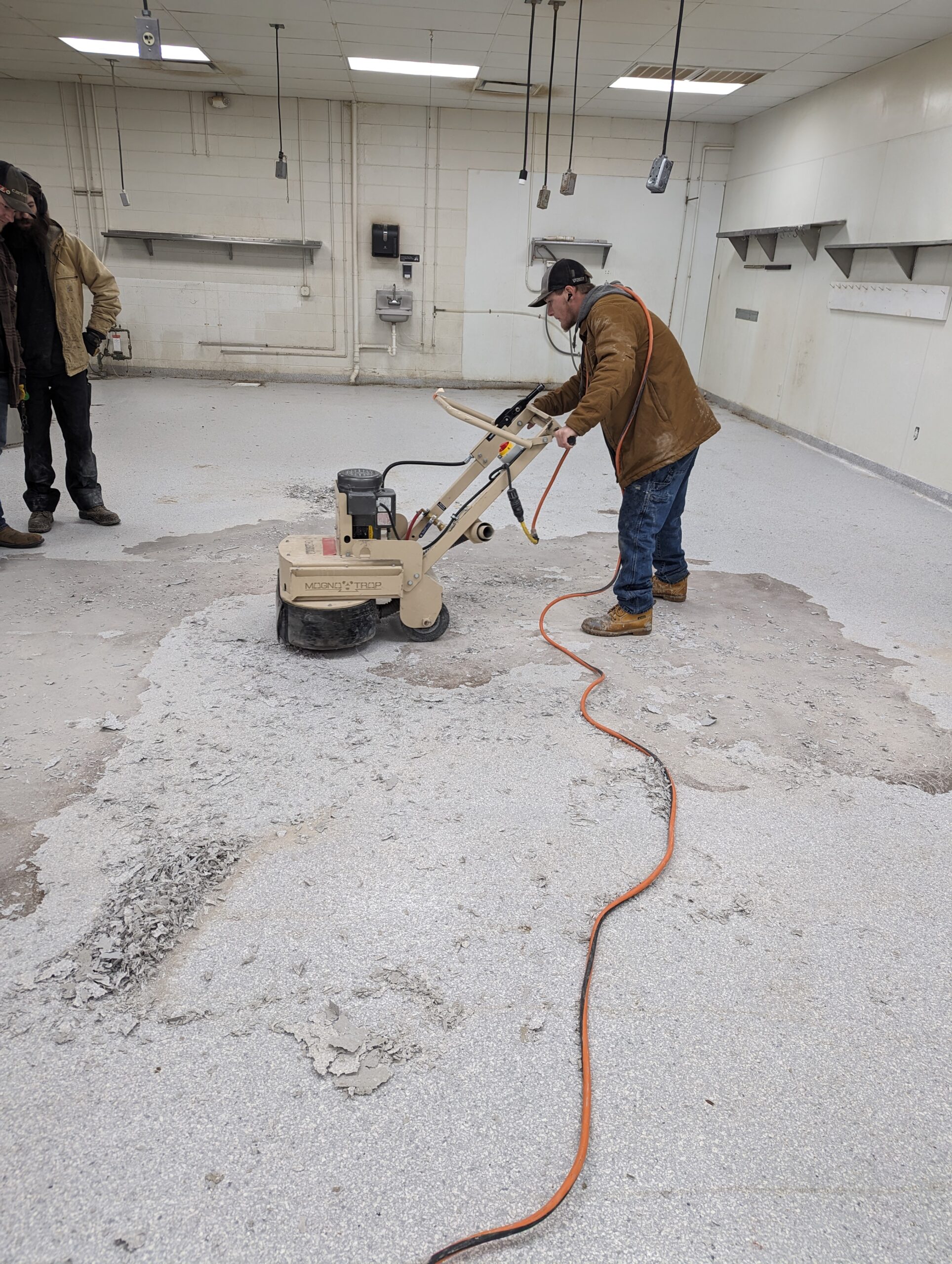
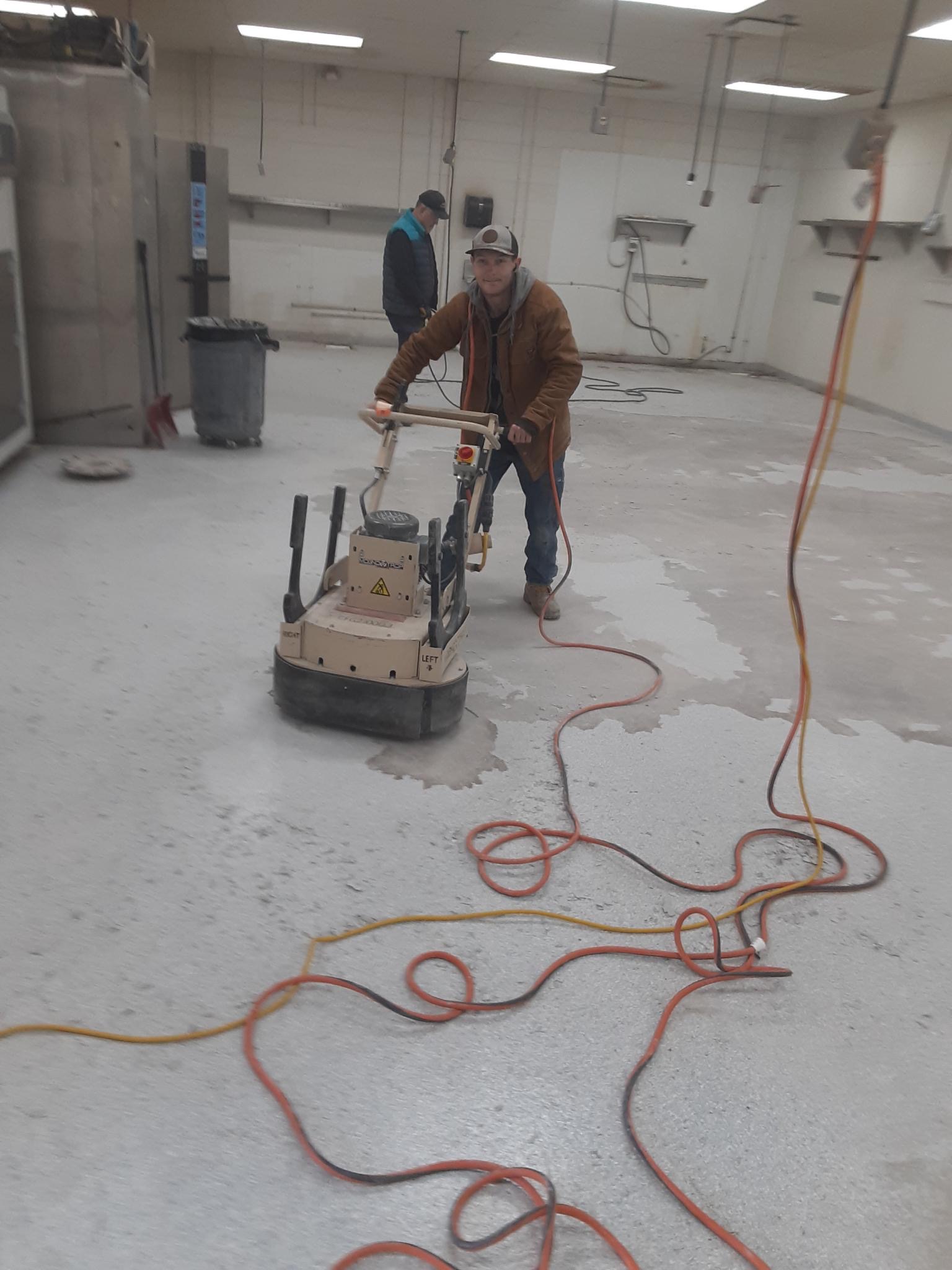
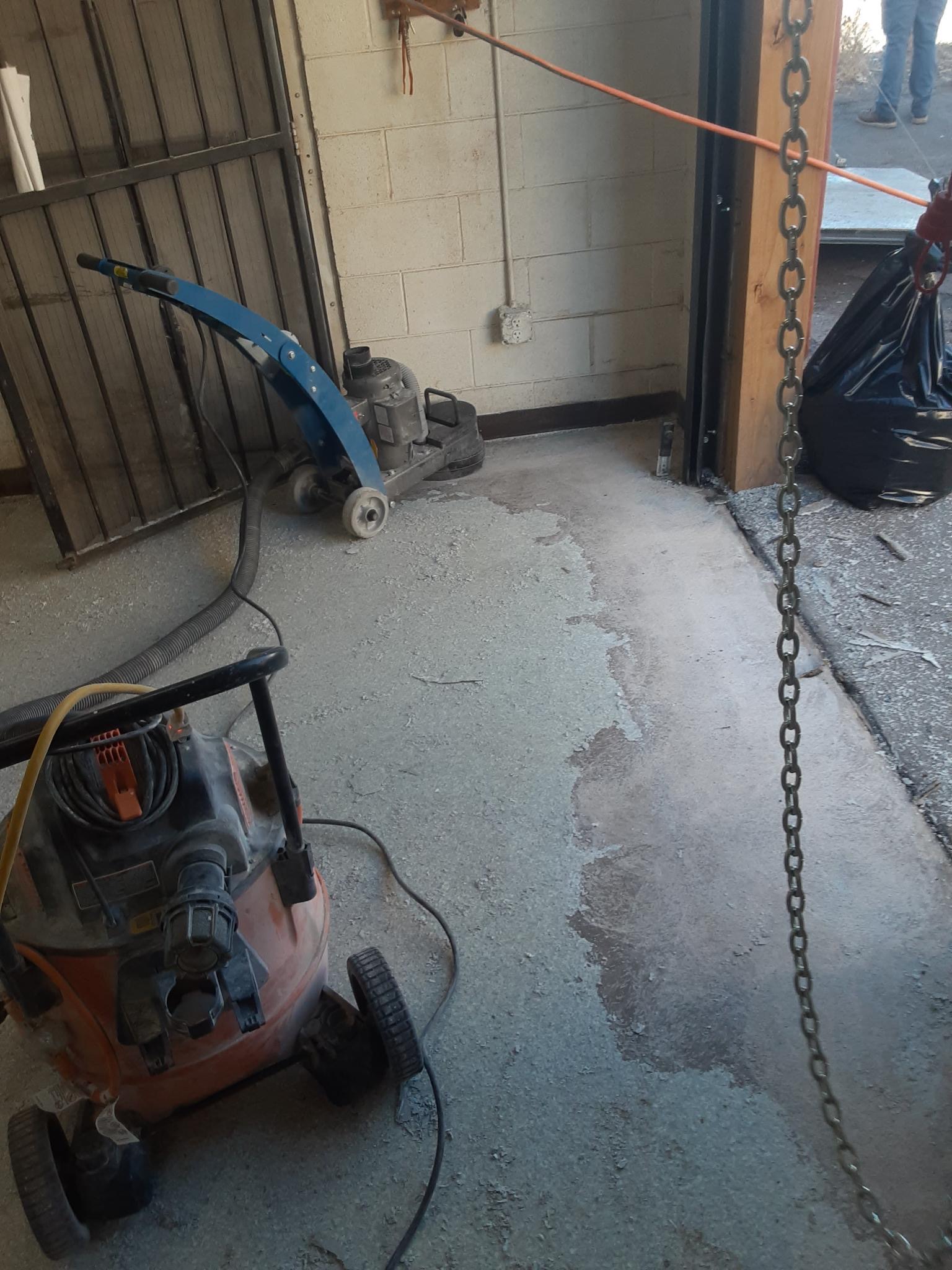
Many contractors acid-etch commercial kitchen floors rather than diamond-grinding. In a kitchen where concrete has absorbed grease and chemicals for years, acid etching does not clean the slab — it coats a contaminated surface. Diamond grinding removes the contaminated layer entirely and opens a clean concrete profile for permanent bonding.
True 3-Coat Commercial System
What Our Polyaspartic System Delivers
Industrial primer
Applied after diamond grinding to open and clean the concrete profile. Penetrates deep into the slab and creates the mechanical bond that supports everything above it. Independent ASTM D4541 pull-off strength testing documents the adhesion strength of this system.
Base coat
Applied over the cured primer. Color or quartz broadcast at this stage to your specification. Quartz aggregate can be incorporated for slip resistance in wet kitchen environments — a practical option for commercial food service floors.
Clear polyaspartic topcoat
The final protective layer. UV-stable, seamless, and chemically resistant across the range of food service cleaning agents. This is the surface your staff works on every day.
The result is a floor that is 4 times more abrasion-resistant than standard epoxy, non-porous across all three coats, and easy to sanitize with standard commercial cleaning equipment. All three coats are 100% polyaspartic — no cheaper base layers, no hybrid system. See how polyaspartic compares to epoxy.
Installation Planning
We Work Around Your Schedule
The most common concern from food service operators is downtime. A kitchen that cannot operate is lost revenue. We schedule installation around your hours — early mornings, evenings, or weekend windows — and phase the work in sections when the space cannot be fully vacated.
Polyaspartic cures significantly faster than epoxy, which is a practical advantage in commercial environments. Return-to-service time is typically 24–48 hours per section. Every commercial project begins with a site assessment and a detailed proposal that includes a phasing plan. You know exactly what to expect before work begins.
Food Service Floor Coating Projects
Colorado Springs Commercial Kitchen Projects
We have completed floor coating projects across a range of food service environments in the Colorado Springs area and surrounding communities.
Colorado Springs Coffee Shop — 400 Sq. Ft., Old Town
Old Town Colorado Springs location. Previous floor was tile — we removed the tile, diamond-ground the concrete slab, and installed our full 3-coat polyaspartic system with a quartz finish. 400 square feet. The quartz aggregate provides slip resistance appropriate for a high-traffic café environment. Photos available.
Cripple Creek Casino Commercial Kitchen — 596 Sq. Ft.
Commercial kitchen in a Cripple Creek casino. The existing epoxy finish had worn through under the demands of a working casino kitchen. We removed the failed coating, diamond-ground the slab, and installed a 3-coat polyaspartic system with a quartz finish. 596 square feet. Cripple Creek is within our mountain community service area west of Colorado Springs. Photos available.
Colorado Springs Bakery — Failed Epoxy Replacement
A Colorado Springs bakery came to us after a competitor's epoxy floor failed in just over a year. We removed the failed coating, diamond-ground the slab, and installed our 3-coat polyaspartic system in a clean, light finish appropriate for a food production environment. See the full project photos and details here.
Custom Polyaspartic
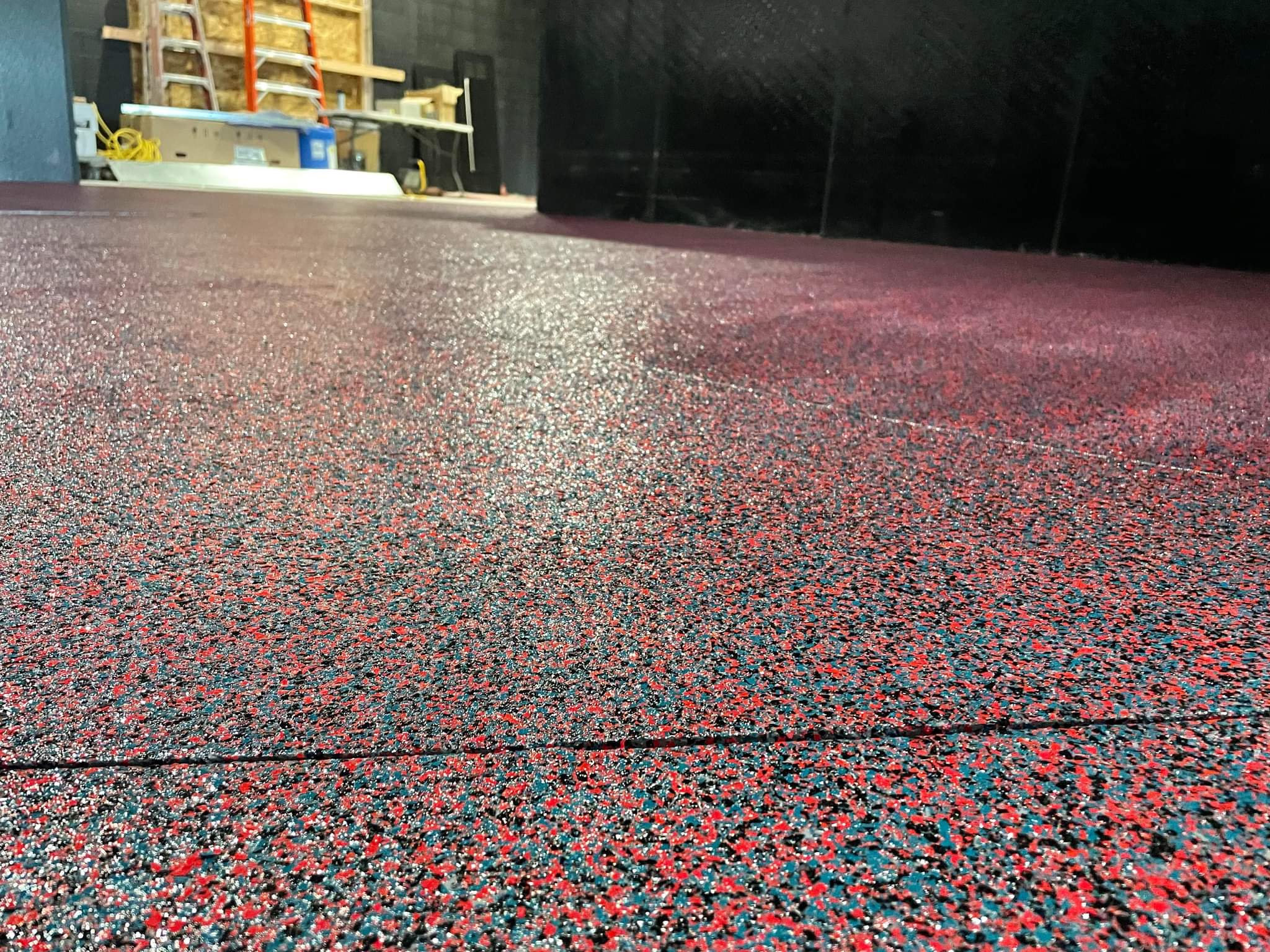
Colorado Springs Brewery — Custom Polyaspartic
A Colorado Springs brewery needed a floor that matched their brand identity. We installed a custom-color 3-coat polyaspartic system throughout the space. See the full project and photos here.
Is Polyaspartic Right for Your Commercial Kitchen?
If your kitchen floor is showing staining, cracking, delamination, or surface porosity — or if you are opening a new facility and want to get the floor right the first time — polyaspartic is the right investment. It is seamless, easy to sanitize, resistant to the full range of food service chemicals, and backed by a commercial warranty.
We serve food service businesses throughout the Colorado Springs area including restaurants, cafes, bakeries, breweries, commercial kitchens, and food production facilities. Our commercial floor coatings service covers the full range of business types we work with.
Commercial Kitchen Floor Coating Answers
Frequently Asked Questions
Is polyaspartic safe for commercial kitchens and food service environments?
Yes. Once cured, polyaspartic is chemically inert and non-porous. It does not off-gas, does not harbor bacteria in surface pores or cracks, and is compatible with standard commercial sanitizing agents. The seamless surface eliminates the grout lines and surface imperfections that standard tile and degraded epoxy create.
How do you handle slip resistance in wet kitchen environments?
We can incorporate quartz aggregate into the base coat to create a slip-resistant surface texture appropriate for wet commercial kitchen environments. The level of texture is specified based on the type of facility and how the floor will be used. We discuss this during the site assessment.
Can you coat a kitchen floor that has existing grease contamination?
Yes — but thorough surface preparation is essential. We use industrial diamond grinders to mechanically remove the surface layer of concrete, including grease-contaminated material. In heavily saturated floors, additional prep steps may be required. We will not apply a coating over a contaminated surface under any circumstances.
Do you offer a warranty on commercial kitchen floor projects?
Yes. Commercial projects are backed by our commercial warranty, documented in writing at project completion. Coverage includes delamination and adhesion failure under normal use conditions. Warranty specifics are reviewed during the bid process.
Commercial Bid Request
Request a Commercial Bid
Tell us about your facility — square footage, current floor condition, type of operation, and any scheduling constraints — and we will put together a detailed proposal with a phasing plan for installation.