


Why Colorado’s Climate Demands More Than Epoxy
Most floor coatings are tested in controlled conditions. Colorado doesn’t offer controlled conditions. Here’s what your garage floor actually deals with in the Pikes Peak region:- Freeze-thaw cycling. Concrete expands and contracts as temperatures rise and fall — sometimes dramatically within the same day. A coating that isn’t bonded at a mechanical level will eventually lose adhesion. Diamond grinding opens the concrete’s pores so the coating bonds into the surface, not just onto it.
- Magnesium chloride. Colorado roads are treated aggressively with mag chloride from fall through spring. It tracks in on tires, boots, and equipment. On bare concrete or a porous epoxy surface, it works into the slab and accelerates deterioration. Polyaspartic’s non-porous finish creates a barrier that wipes clean.
- High-altitude UV exposure. At 6,000 feet, UV intensity is significantly higher than at sea level. Standard epoxy yellows, ambers, and chalks under that exposure — sometimes within two to three seasons. Polyaspartic is 100% UV-stable. The color and finish you see on install day are the color and finish you’ll see a decade later.
- Temperature extremes. Epoxy requires temperatures above 50°F to cure properly, which eliminates it as an option for most of Colorado’s calendar. Polyaspartic cures in temperatures as low as -20°F — no seasonal restriction, no waiting for spring.
- Diamond grinding. Every installation starts with industrial diamond grinders that mechanically open the pores of your concrete. This creates a physical bond between the coating and the slab — not a surface adhesion that can peel. It’s the most important step in the process, and it’s the one most competitors skip or shortcut. Independent adhesion testing shows just how significant that bond strength difference is — Slide-Lok’s pull-off strength test data documents the results.
The System Behind the Performance
Cold-weather capability doesn’t mean much if the floor isn’t built to last. What makes our polyaspartic system perform in Colorado conditions — winter or summer — is the three-stage installation process.
- Diamond grinding. Every installation begins with industrial diamond grinders that mechanically profile the concrete surface, opening the pores so the coating bonds into the slab rather than sitting on top of it. Most competitors skip or shortcut this step — and it’s the single biggest reason coatings fail. Independent adhesion testing documents just how significant that bond strength difference is: Slide-Lok’s pull-off strength test data shows the results.
- Base coat + color/flake coat. Both coats use 100% polyaspartic resin — not an epoxy or hybrid base layer with a polyaspartic topcoat applied over it. That distinction matters. A cheaper base layer changes how the system performs under Colorado’s conditions, and it changes what a warranty is actually worth.
- Heavy polyaspartic topcoat. The finish coat seals the system, adds depth, and delivers the UV and chemical resistance that makes this floor a long-term investment rather than a short-term fix.
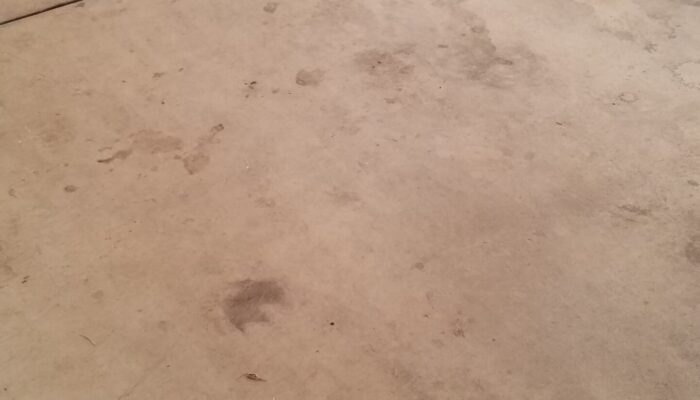 Before


What the Warranty Actually Covers
The residential lifetime warranty on this system isn’t a marketing claim — it’s a commitment backed by the product itself. Slide-Lok polyaspartic is engineered specifically for this application, and the warranty reflects confidence in how the material performs when it’s installed correctly.
That word — correctly — is where most warranty disputes in this industry begin. A contractor who uses a cheaper base coat, skips diamond grinding, or applies product outside its rated temperature range isn’t installing a warranted system. They’re installing something that looks similar on quote day but performs very differently over time.
When we say the warranty is built on the system, we mean every component: the surface prep, the product, and the process. All three have to be right. Here, they are.
Year-Round Installation. One Floor. Done Right.
Most contractors in Colorado Springs shut down floor coating work when the temperature drops. We don’t. Polyaspartic’s cold-weather performance means your project moves forward on your schedule — not the season’s.
That matters more than it might seem. Homeowners who want their garage done before the holidays, commercial clients who can’t wait until April to open, anyone working through a winter renovation — none of them should have to pause for a coating that can’t handle Colorado. This one can, and the installation process is identical in January and July.
We serve homeowners and commercial clients across the Colorado Springs area — Colorado Springs, Fountain, Monument, Falcon, Black Forest, Peyton, and Pueblo. With over 1,000 installations completed across 16 years and a 5.0 rating on our Google reviews, we’ve built a reputation in this community on doing the job right the first time.
Your free estimate includes a full assessment of your concrete, a walkthrough of your color and finish options, and a clear picture of what the installation involves. No pressure. No upsell. Just the information you need to make the right call.
Ready to get started? Schedule your free estimate today.